Black Lives Matter Reflection

Don’t stay silent, here are my thoughts.

Before coronavirus, there was already a virus that has been around since the beginning of the country and that is racism. Racism is structured into this country and into the criminal justice system. For there to be change, it needs to happen systematically, otherwise injustice seems infinite. There is too much mourning, too many hashtags and too little change happening.

George Floyd is now another name on the list of the thousands of Black people that have been killed because of the color of their skin. The fact that these racist acts of injustice continue to happen during an ongoing pandemic is sickening. It seems to happen too often that there is a new headline about another minority being wrongfully killed. 

As I try to spread awareness and have educated discussions with friends and coworkers, statements I continue to hear are “What are riots going to do?” and “They shouldn’t be burning down buildings or stealing.” Whenever I hear these thoughts, I debate and express why I think that the riots are what we need. We are protesting our own genocide. We have tried peaceful protests time after time and nothing has changed. Oh, but riots are okay when Americans want the economy to open back up? These riots are ways of letting our voices be heard for the desperate need for action to be taken. A Black and Latino journalist was arrested before the police officer who killed Floyd. THAT ALONE IS REASON TO RIOT. 

It’s crazy and disheartening to realize that this will be reality for a long time coming and what will it take for the systemic change to occur? I am only 19 years old and I am already tired of all of the lives lost, racist remarks and injustices. BLACK LIVES MATTER AND IF THERE’S NO JUSTICE, THERE IS NO PEACE. 

“If you are neutral in situations of injustice, you have chosen the side of the oppressor.”

How the coronavirus was handled at Stony Brook University

Monday morning of March 9 I was excited for this week to pass by so it could be spring break. That afternoon everything changed. Rumors spread by conversations between students and emails between faculty/staff and students started to spread on the campus of Stony Brook University, regarding the switch to online classes after spring break. As soon as I got notice of this, I got to reporting and writing. Brianne Ledda, News Editor of The Statesman, and I ended up having “Stony Brook University is planning to move classes online after spring break” published that same day after we were able to corroborate emails and announcements that were being made during classes. We broke the news. As we were all reporting, we realized that there was no communication in all of this. There was no clarity or transparency. Students, faculty and staff were confused and there was not one single email addressing any of the rumors that anybody could hear by simply walking through campus. 

The following day on March 10, The Statesman editorial team published an editorial that we are all extremely proud of. Everything we said in “Stony Brook University needs to communicate with the campus community” was everything that students on campus were thinking. Yes, Stony Brook University is a part of the SUNY system, which makes the reason as to why the official announcement couldn’t be made until after Governor Andrew Cuomo announced it, but a simple email regarding the confusion and rumors would’ve been better than nothing. The amount of anticipation and anxiety between the day we published the breaking news article and the day the official announcement was made was something I had never experienced before. 

Students were seen voicing their concerns and expressing their thoughts at a protest on Wednesday, March 11. My friends and I were going to get lunch at first to bid farewells due to an unexpected longer spring break, but when we heard of the protest we decided to cover and report what students thought. Watching SBU students come together telling administration that they want answers and demand the truth was enlightening. After writing “Students protest university silence” with the other amazing news assistant, Samantha Robinson, we realized that everything we had written prior to inspired change. 

Being a student reporter this week was extremely stressful, but an enlightening reporting and writing experience. Of course, this is all because of the coronavirus, which is a pandemic that is affecting people at a fast-paced rate. 

This week has been a roller coaster of emotions due to frustration with the administration, happiness because of the accomplishments of The Statesman and sadness since I am losing in-person education and some of my best friends for a couple of months. 

I just want to thank The Statesman for everything and this week will be down in history.

Here is the link to the breaking news article.

Spike Lee Reflection


I was so honored to have had the opportunity to meet Spike Lee, an award-winning filmmaker, on Wednesday, Feb. 5 as part of the opening of Black History Month. In his lecture he spoke about the lies that we are told in education regarding Black culture and how it’s up to us to teach ourselves the truth. He also spoke about the current political climate and how parenting can affect what a child wants to pursue in life. The whole event was so inspiring and moving and it was truly a great way to begin this celebratory month.

Assistant News Editor Reflection

This past fall semester was my first semester on the editorial board of The Statesman, the Stony Brook University’s campus newspaper, as Assistant News Editor and it has been such an amazing experience thus far.

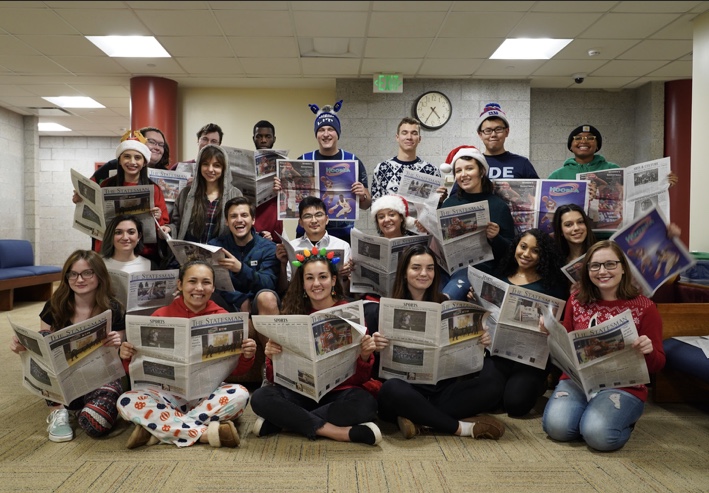
Moving to Stony Brook University, I immediately began writing for The Statesman and moved my way up from Contributing Writer to my position now within nine months. Being Assistant News Editor, the experience I have gained is incomparable to any other title I have held. Creating the layout of articles I have pitched, edited and written and watching it become a print copy, is an amazing feeling. 

I have learned the ins and outs of Adobe InDesign, WordPress, valuable reporting and writing skills, editing and how to handle breaking news. I have also learned about flexibility, being able to adjust my pace according to demands and being able to truly determine what is newsworthy. 

Thankfully, in this work setting, I have earned a reputation as a dedicated journalist with a passion for accurately covering important issues and events, engaging readers and helping fuel positive change.

I am so excited to continue developing my skills and becoming the best journalist I can possibly be through my experience with The Statesman. Also, the connections and bonds I have formed with every single person on the editorial board is special. Until next year!

*All of the articles I have written so far can be found here.

Production day at The Statesman on Sunday, Dec. 8.

Digital Technology Credential

As part of my affiliation with the Stony Brook Career Center, I was given the opportunity to showcase my accomplishments through a Digital Technology Digital Credential. Digital credentials recognize skills, abilities and knowledge gained through experiences verified by a university authority.

Gaining this credential now shows I have the skills to leverage existing digital technologies ethically and efficiently to solve problems, complete tasks, and accomplish goals; demonstrate my adaptability to new and emerging technologies; select and use appropriate technology to accomplish a given task whether it involves storing, retrieving, transmitting, manipulating, or visualizing data; and apply computing skills to solve problems.

Criteria for this specific credential included showcasing my ability to use computer programs to organize, sort and make sense of data or solve problems; and demonstrating the use of technology in the workplace to improve process flow of daily tasks and/or larger scale project management.

http://t.cred.ly/l/9a72dbd0-0087-4de7-8d8d-49e066047042

Growing Up Divided

As I grew up in the town of Freeport on Long Island, I always knew it was a predominantly Hispanic and Black community. I always wondered why other surrounding communities had a drastically different racial makeup. As a child, you immediately start to realize what towns on Long Island are predominantly white and which ones are predominantly made up of minorities. 

If you’re from Nassau County, you know that line that separates Hempstead from Garden City, and the drastic change in the types of houses you see. When I came to Stony Brook, I could tell how different Nassau and Suffolk County was though the struggle I had to go through to find a Dominican salon or a little bodega to get Spanish food throughout the town. 

Being involved in many clubs in Freeport High School, I got used to always being stared at when we would go to events with other schools from the Suffolk County area because we were usually the only ones with color in our skin. Despite the constant stares, I knew my school district was one of the best ones out there. According to the story, a real estate agent says to a white buyer, “So a lot of people will say to me, ‘Oh, I don’t care. I’ll take Freeport and all the houses are cheap there. I don’t care about the school district. I don’t have any children.’ I say, ‘But you have to protect your investment.” Meanwhile, Freeport High School has won numerous awards and my graduating class was one of the most competitive I have seen. In 2017, the graduation rate was 73 percent. I take pride in Freeport High School because it made me who I am today and the fact that this lady had the nerve to say this to a potential buyer frustrates me. 

The reason for all of this is racism. The saddest part is these real estate agents are causing this racism due to the separate and unequal treatment they are providing for minority potential buyers on Long Island.

Thank you Newsday for shedding light on this important topic.

Read my opinions article on this matter here.

USG Constitutional Referendum

Stony Brook University’s Undergraduate Student Government (USG) announced a constitutional referendum in a campus-wide email on Saturday, Nov. 9. USG opened voting at 12 p.m. on Monday, Nov. 11 and gave students until 12 p.m. on Friday, Nov. 15.

The referendum included more than 250 changes, including abolishing the judiciary branch, changing student representation in the senate and eliminating required office hours for USG members.

On Tuesday, Nov. 12, three other Statesman reporters and myself worked in the office to push out important information to students.

We announced there would be a town hall on Wednesday, Nov. 13. During this town hall, we were also able to livestream on Facebook, in which we asked several USG members questions.

We also announced that the referendum included a major change of eliminating the judicial branch. According to the current version of the constitution, the duties and responsibilities of the judiciary branch include jurisdiction over the impeachment of members of the legislative and executive branches. However, the proposed constitution would delegate impeachment procedures to the legislative and executive branches, which interferes with checks and balances.

In terms of the referendum as a whole, we also spoke about the other proposed changes and what they meant to the student body.

On Thursday, Nov. 14, I was also given the opportunity to help produce a podcast between a member of the judicial branch of USG and an executive council member of USG, discussing the proposed changes.

Covering the constitutional referendum this past week was definitely a journey, but at the end it was all worth it, as we were able to give students the opportunity to make an informed decision on the referendum.